
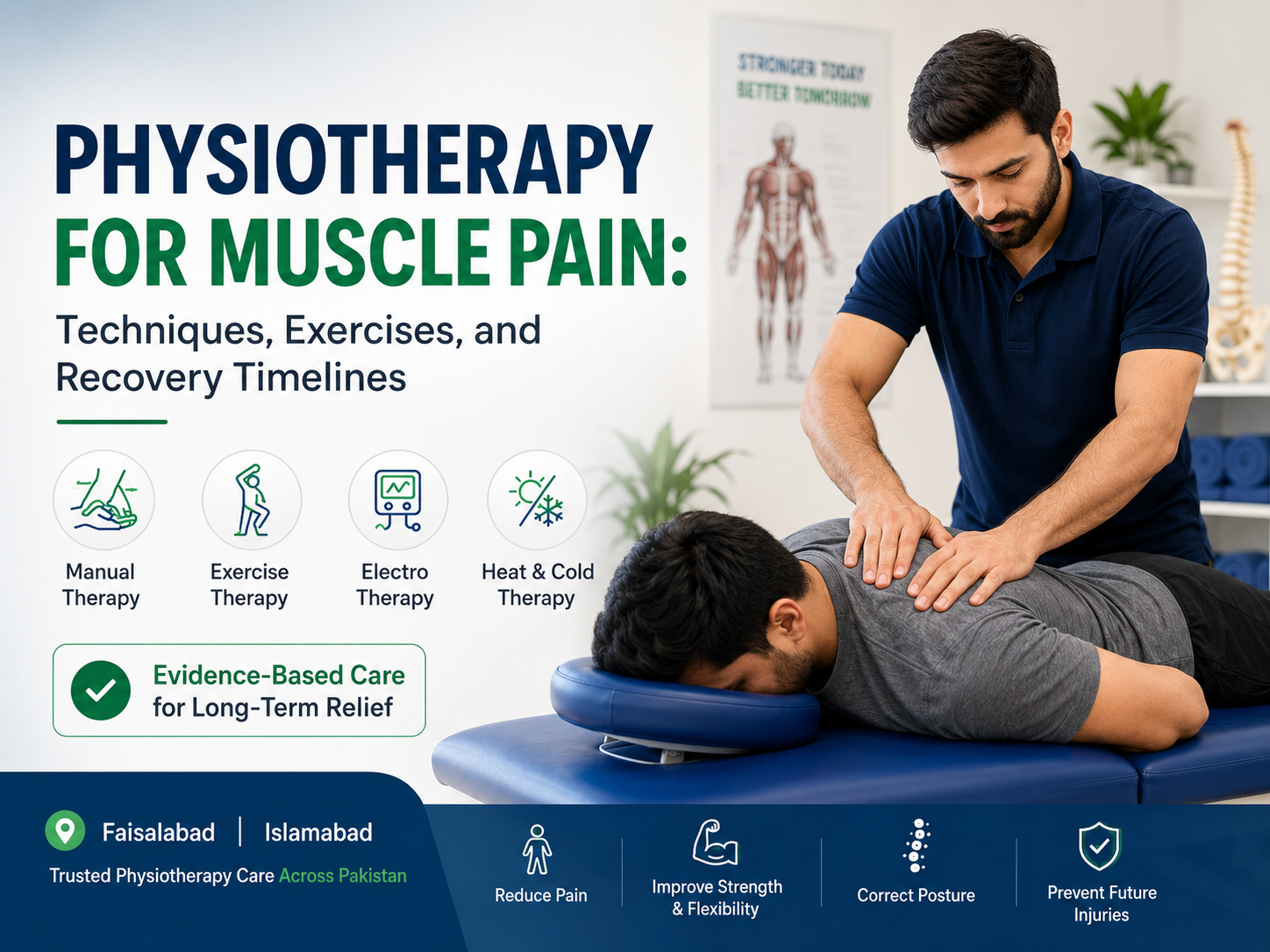
Muscle pain is one of the most common musculoskeletal problems affecting people of all ages in Pakistan, especially in cities like Lahore, Faisalabad, Islamabad, etc, where desk jobs, long commutes, and physical labor are part of daily life. It can develop for several reasons, including poor posture, long hours of sitting or standing, repetitive work activities, sports injuries, sudden physical strain, or even ongoing stress and muscle tension. In many cases, what begins as mild discomfort can gradually progress into persistent or chronic pain if it is not assessed and treated properly.
Physiotherapy is widely recognized as one of the most effective, safe, and non-invasive treatments for muscle pain. Instead of relying only on temporary pain relief methods, physiotherapy focuses on identifying the underlying cause of the problem and treating it at its source. This approach helps reduce pain, restore normal muscle function, improve flexibility and strength, and support long-term recovery.
At Health360, with clinics in Faisalabad and Islamabad, we follow evidence-based physiotherapy and chiropractic protocols tailored to each patient’s condition and lifestyle. Our treatment plans are designed not only to relieve current symptoms but also to correct movement patterns, improve posture, and prevent future recurrence of muscle pain.
What is Muscle Pain? A Guide for Patients in Pakistan
Muscle pain (also known as myalgia) occurs when muscle fibers are strained, overused, or injured. It can be localized (one muscle or area), widespread (multiple muscle groups), acute (sudden onset), and chronic (long-term pain lasting weeks or months). Common causes include:
- Poor posture (especially desk jobs)
- Gym or sports injuries
- Heavy lifting or sudden movement
- Stress and tension
- Dehydration or nutritional imbalance
- Underlying joint or nerve conditions
Understanding the underlying cause of muscle pain is essential for effective treatment and long-term relief. Early assessment and proper physiotherapy can help prevent complications and restore normal movement and comfort.
Why Physiotherapy is the Best Treatment for Muscle Pain in Pakistan
Physiotherapy is widely recognized as one of the most effective treatments for muscle pain because it focuses on restoring movement, improving muscle balance, and supporting long-term healing rather than offering short-term symptom relief. It works by addressing the underlying causes of pain and helping the body recover naturally through guided, structured techniques.
Unlike painkillers, which only provide temporary relief by masking symptoms, physiotherapy targets the root cause of the problem. It helps improve blood circulation to affected muscles, strengthens weak or underactive muscle groups, restores flexibility and range of motion, and reduces stiffness and discomfort. Over time, it also helps correct posture and movement patterns, which plays a key role in preventing future injuries.
At reputed clinics like Health360, every physiotherapy plan is carefully customized according to the patient’s muscle condition, pain intensity, and daily lifestyle. This personalized approach ensures more effective recovery and long-lasting results.
Physiotherapy Techniques for Muscle Pain
Physiotherapy for muscle pain involves a combination of carefully selected manual, physical, and electrotherapeutic techniques. Each method is designed to target pain, improve muscle function, and support long-term recovery based on the patient’s specific condition and severity of symptoms.
1. Manual Therapy
Manual therapy includes hands-on treatment techniques such as massage, soft tissue mobilization, and joint manipulation. These methods help release muscle tightness, reduce stiffness, and improve blood circulation to the affected area. By directly working on muscles and surrounding tissues, manual therapy also helps decrease pain and restore normal movement patterns.
2. Exercise Therapy
Exercise therapy plays a central role in physiotherapy treatment. It involves customized exercise programs designed to strengthen weak muscles, improve flexibility, and enhance overall endurance. These exercises are gradually progressed to support safe recovery, restore functional movement, and reduce the risk of future injuries.
3. Electrotherapy
Electrotherapy uses advanced modalities such as TENS (Transcutaneous Electrical Nerve Stimulation) and ultrasound therapy to manage pain and inflammation. These techniques work by stimulating nerves, improving local circulation, and promoting tissue healing, making them particularly effective for both acute and chronic muscle pain.
4. Heat and Cold Therapy
Heat therapy is used to relax tight and stiff muscles by increasing blood flow and improving tissue elasticity. In contrast, cold therapy helps reduce inflammation, swelling, and acute pain by slowing down nerve activity and decreasing blood circulation to the affected area. The appropriate method is chosen based on the stage and nature of the injury.
5. Dry Needling (if required)
Dry needling is an advanced technique used to target deep muscle trigger points that are often responsible for chronic pain and stiffness. By releasing these tight knots, it helps improve muscle function, reduce referred pain, and enhance overall mobility. It is typically used when conventional therapies alone are not sufficient.
6. Postural Correction Therapy
Postural correction therapy focuses on improving body alignment during daily activities such as sitting, standing, and lifting. Poor posture is a major contributor to recurring muscle pain, and correcting these patterns helps reduce unnecessary muscle strain, prevent reinjury, and support long-term musculoskeletal health.
Our Physiotherapy Techniques for Muscle Pain at Health360 Faisalabad & Islamabad
At Health360, we use a combination of modern, evidence-based techniques tailored to your specific muscle condition. Here is a quick overview of what each treatment involves and who it is best suited for:
Technique |
Best For |
Session Duration |
Available At |
| Manual Therapy | Muscle tightness, stiffness, restricted movement | 20–30 min | Faisalabad & Islamabad |
| Soft Tissue Mobilization | Deep muscle knots, fascia tension | 20–30 min | Faisalabad & Islamabad |
| Electro Therapy (TENS) | Acute & chronic muscle pain, inflammation | 15–20 min | Faisalabad & Islamabad |
| Therapeutic Ultrasound | Deep tissue healing, chronic strain | 15–20 min | Faisalabad & Islamabad |
| Shockwave Therapy | Stubborn chronic pain, tendinopathy | 10–15 min | Faisalabad & Islamabad |
| Laser Therapy | Inflammation, nerve-related muscle pain | 10–20 min | Faisalabad & Islamabad |
| Kinesiotherapy | Movement retraining, muscle weakness | 30–45 min | Faisalabad & Islamabad |
| Cryotherapy & Heat Therapy | Acute injury (cold) / stiffness relief (heat) | 10–15 min | Faisalabad & Islamabad |
| Dry Needling | Trigger points, deep chronic muscle pain | 10–15 min | As required |
| Postural Correction | Recurring pain from desk work, poor posture | Ongoing | Faisalabad & Islamabad |
Treatment duration and combination depend on your individual assessment. Our physiotherapists will recommend the most effective plan for your condition.
Best Exercises for Muscle Pain Relief in Pakistan
Experienced physiotherapists and chiropractors at Health360 recommend a range of carefully selected exercises to help relieve muscle pain, improve mobility, and restore normal muscle function. The exact exercise plan depends on the patient’s condition, pain level, and affected muscle groups, ensuring safe and effective recovery.
a. Gentle Stretching Exercises
Gentle stretching helps reduce muscle tightness and improve flexibility. Common examples include neck stretches, hamstring stretches, and shoulder rolls. These movements help release tension in stiff muscles, improve blood flow, and gradually restore a comfortable range of motion.
b. Strengthening Exercises
Strengthening exercises focus on rebuilding muscle support and stability. These may include resistance band exercises, controlled bodyweight squats, and core strengthening routines. By improving muscle strength, these exercises help reduce strain on injured areas and prevent future recurrence of pain.
c. Mobility Exercises
Mobility exercises involve controlled joint movements designed to improve overall flexibility and movement quality. Light yoga-based physiotherapy movements are often included to enhance coordination, reduce stiffness, and support smoother, pain-free motion in daily activities.
d. Relaxation Exercises
Relaxation techniques play an important role in reducing muscle tension caused by stress or overuse. Deep breathing exercises and muscle relaxation training help calm the nervous system, ease tightness, and support overall physical and mental recovery.
Important Tip: All exercises should be performed under professional guidance. Incorrect exercise selection or improper technique can worsen muscle pain and delay recovery.
Recovery Timeline for Muscle Pain
Recovery from muscle pain varies depending on the severity of the condition, the underlying cause, and how early treatment is started. With proper physiotherapy and care, most patients experience steady improvement within a predictable timeframe.
Mild Muscle Pain
Mild muscle pain usually resolves within 3-7 days. It is often caused by minor strain, overuse, or poor posture. Treatment typically includes rest, gentle stretching, light physiotherapy exercises, and basic pain management strategies. With early intervention, recovery is usually quick and uncomplicated.
Moderate Muscle Strain
Moderate muscle strain generally takes around 2-4 weeks to heal. This level of pain may involve small muscle tears or more noticeable inflammation. Treatment often includes manual therapy, structured exercise therapy, and gradual strengthening exercises to restore normal muscle function and prevent stiffness.
Severe or Chronic Muscle Pain
Severe or long-standing muscle pain may require 4-8 weeks or longer, depending on the extent of damage and patient response to treatment. Management usually involves a comprehensive rehabilitation program that includes advanced physiotherapy techniques, progressive exercises, posture correction, and ongoing monitoring.
At Health360, patient progress is continuously assessed, and treatment plans are adjusted regularly to ensure safe, effective, and long-lasting recovery outcomes.
Physiotherapy for Chronic Muscle Pain
Chronic muscle pain is a long-term condition that often develops gradually over time and can significantly affect daily movement and quality of life. It is commonly caused by poor posture habits, repetitive strain injuries, untreated minor muscle injuries, and a sedentary lifestyle that leads to muscle weakness and imbalance. When these factors persist, they can result in ongoing pain, stiffness, and reduced functional ability.
Physiotherapy plays a key role in managing and treating chronic muscle pain by addressing its root causes rather than just the symptoms. It focuses on retraining proper muscle movement patterns to restore normal function and reduce compensatory strain on surrounding muscles. Posture correction techniques are used to improve body alignment during daily activities, while targeted exercises help enhance core stability and overall support for the spine and joints.
In addition, physiotherapy helps reduce nerve irritation that may contribute to persistent pain and discomfort. Strengthening weak muscle groups is also an essential part of treatment, as it restores balance, improves endurance, and prevents recurrence of symptoms. Over time, this comprehensive approach helps patients achieve long-term pain relief and improved physical performance.
When Should You See a Physiotherapist?
You should consider visiting a physiotherapist if you notice any of the following signs or symptoms, as early intervention can help prevent the condition from becoming more severe or long-lasting:
- Pain persists for more than 5-7 days without noticeable improvement, even with rest or basic home care.
- Pain keeps returning frequently, indicating an underlying issue that has not fully healed.
- You experience stiffness, tightness, or reduced range of motion that makes normal movement difficult.
- Pain becomes worse during physical activity, lifting, or routine daily movements.
- Pain begins to interfere with your daily activities, work performance, or sleep quality, affecting overall well-being.
Prevention Tips for Muscle Pain
While not all muscle pain can be avoided, adopting healthy daily habits can significantly reduce your risk of developing muscle strain, stiffness, and chronic discomfort. The following preventive measures can help keep your muscles strong, flexible, and functioning properly:
- Maintain proper posture while sitting, standing, and working to reduce unnecessary strain on muscles and joints
- Take regular breaks during long periods of sitting to improve circulation and prevent muscle stiffness
- Stay physically active through regular exercise to maintain muscle strength, flexibility, and endurance
- Always warm up before exercise or physical activity to prepare your muscles for movement and reduce the risk of injury
- Use correct lifting techniques and avoid lifting heavy objects improperly to prevent muscle strains and back injuries
- Stay adequately hydrated, as dehydration can contribute to muscle cramps, fatigue, and soreness
- Incorporate regular stretching into your routine to improve flexibility, relieve tension, and maintain a healthy range of motion
By following these simple habits consistently, you can reduce the likelihood of muscle pain, improve overall physical wellbeing, and support long-term musculoskeletal health.
Why Choose Health360 for Muscle Pain Physiotherapy in Pakistan?
Health360 has built a strong reputation as one of Pakistan’s most trusted physiotherapy and rehabilitation providers. Our clinics in Faisalabad and Islamabad collectively serve hundreds of patients every month across a wide range of musculoskeletal and pain conditions. Our physiotherapists and chiropractors carry extensive clinical experience treating muscle pain, sports injuries, postoperative rehabilitation, and chronic pain conditions.
We specialize in 7 major body areas, Shoulder, Elbow, Spine & Back, Hip, Wrist, Knee, and Foot & Ankle, and offer 9 advanced treatment modalities in-clinic, ensuring that whatever the source of your muscle pain, our team has the expertise and equipment to treat it effectively.
Patients who complete their full physiotherapy program at Health360 consistently report significant improvement in pain levels, daily mobility, and overall quality of life, with many returning to full activity within their expected recovery timeline.
- Experienced physiotherapists with extensive clinical expertise in treating muscle pain, injuries, and movement disorders.
- Advanced rehabilitation equipment and modern therapy techniques to support faster and more effective recovery.
- Personalized treatment plans tailored to each patient’s condition, goals, and lifestyle requirements.
- Convenient home physiotherapy services available in Faisalabad and Islamabad for patients who prefer treatment at home.
- High-quality physiotherapy care at competitive and affordable rates, ensuring patients receive effective treatment without compromising on standards.
- Evidence-based treatment approaches focused on proven methods for pain relief, rehabilitation, and functional recovery.
- Multidisciplinary care that integrates physiotherapy, chiropractic care, and rehabilitation services for comprehensive treatment.
At Health360, our focus goes beyond temporary symptom relief. We are committed to helping patients achieve long-term recovery, restore full muscle strength and mobility, and return to their daily activities with confidence.
Muscle Pain Physiotherapy Services in Faisalabad & Islamabad
Whether you are dealing with sudden muscle strain or long-standing chronic pain, Health360 provides expert physiotherapy care at our clinics in Faisalabad (Jinnah Colony, Satiana Road, Canal Road) and Islamabad (Bahria Town Phase 7). Our teams in both cities are equipped with advanced rehabilitation technology and experienced physiotherapists who understand the physical demands of daily life in Pakistan, from long office hours and factory work in Faisalabad to the commuting stress and sedentary routines common in Islamabad.
At our Faisalabad clinic, we offer a full range of muscle pain treatments including Advance Physiotherapy, Shockwave Therapy, Soft Tissue Mobilization, Electro Therapy, Laser Therapy, Kinesiotherapy, Therapeutic Ultrasound, Cryotherapy & Heat Therapy, and Manual Therapy, all under one roof at Jinnah Colony, Satiana Road, and Canal Road.
At our Islamabad clinic, the same evidence-based treatment protocols are followed by our certified team, ensuring consistent, high-quality care for patients across the twin cities.
Can’t visit the clinic? Home physiotherapy visits are available in both Faisalabad and Islamabad for patients who prefer treatment in the comfort of their own home, particularly helpful for elderly patients, post-surgical recovery cases, or those with mobility limitations.
📍 Faisalabad: Jinnah Colony, Satiana Road, Canal Road, 📍 Islamabad: Bahria Town Phase 7, 📞 Book your appointment today and take the first step toward a pain-free life.
What to Expect at Your First Physiotherapy Session at Health360?
Many patients feel uncertain about visiting a physiotherapist for the first time. Here is what a typical first session looks like at Health360:
- Initial Assessment (10–15 minutes): Your physiotherapist will ask about your pain history, lifestyle, work routine, and any previous treatments. This helps build a complete picture of your condition.
- Physical Examination (10–15 minutes): Your posture, muscle strength, flexibility, and range of motion will be assessed. For muscle pain, the therapist will also check for trigger points, areas of tightness, and any compensatory movement patterns.
- Diagnosis & Treatment Plan Discussion (5–10 minutes): Based on the assessment, your physiotherapist will explain the likely cause of your pain, recommend a treatment approach, and give you an estimated recovery timeline.
- First Treatment Session (20–30 minutes): Depending on your condition, your first session may include manual therapy, electrotherapy, heat or cold application, or guided stretching exercises.
- Home Exercise Guidance: You will typically be given 2–3 simple exercises to perform at home between sessions to support your recovery.
Most patients leave their first session feeling noticeably less tension and with a clear plan for recovery, which itself reduces anxiety and encourages consistent follow-through.
Health360: Your Most Trusted Physiotherapy Partner for Muscle Pain
Muscle pain should never be ignored, especially when it begins to affect your mobility, productivity, sleep, or overall quality of life. While temporary remedies may provide short-term relief, lasting recovery requires identifying and treating the underlying cause of the pain. Physiotherapy for muscle pain offers a safe, effective, and evidence-based solution that not only relieves symptoms but also restores normal function and helps prevent future recurrence.
At Health360, we are committed to helping patients achieve long-term recovery through personalized physiotherapy and rehabilitation programs. Our experienced team focuses on reducing pain, improving movement, rebuilding strength, and enhancing overall physical well-being. Whether you are dealing with a recent muscle strain or chronic muscle pain, we provide customized care designed to help you return to an active, healthy, and pain-free life.
Don’t let muscle pain hold you back. Get in touch with Health360 today and start your journey toward a stronger, healthier, and pain-free life.
Frequently Asked Questions – Physiotherapy for Muscle Pain in Pakistan:
What is the fastest way to treat muscle pain with physiotherapy?
The fastest recovery comes from early intervention combined with a multi-technique approach, typically manual therapy, electrotherapy or ultrasound, guided stretching, and exercises. Starting treatment within the first few days of pain onset leads to significantly faster recovery.
Is physiotherapy good for muscle pain?
Yes, physiotherapy is one of the most effective treatments for muscle pain because it treats the root cause rather than just symptoms.
How many physiotherapy sessions are needed for muscle pain?
It depends on severity. Mild cases may need 2–5 sessions, while chronic pain may require several weeks of therapy.
Is physiotherapy available at home in Faisalabad?
Yes. Health360 offers professional home physiotherapy services in Faisalabad for patients who cannot visit the clinic due to mobility limitations, post-surgical recovery, or personal preference. Our therapist brings the same clinical expertise and treatment protocols directly to your home.
Is home physiotherapy available in Islamabad?
Yes. Home physiotherapy visits are also available in Islamabad. Contact Health360 to schedule a home session with one of our certified physiotherapists.
Which is the best physiotherapy clinic in Faisalabad for muscle pain?
Health360 at Jinnah Colony, Canal Road, Satiana Road, Faisalabad is widely recognized for its comprehensive approach to muscle pain treatment, offering advanced services including Shockwave Therapy, Laser Therapy, Electro Therapy, and Manual Therapy under one roof.
What is the cost of physiotherapy for muscle pain in Pakistan?
Physiotherapy session fees vary depending on the type of treatment and number of sessions required. Health360 offers competitive and affordable rates in both Faisalabad and Islamabad. Contact our clinic directly for current pricing and package options.
Can physiotherapy completely cure muscle pain?
In most cases, yes, especially when the cause is postural, strain-related, or due to muscle weakness. Health360's comprehensive approach not only relieves pain but corrects the underlying cause to prevent recurrence.
Do I need a prescription to visit a physiotherapist in Pakistan?
No. You can book a direct appointment at Health360 in Faisalabad or Islamabad without a referral or prescription from a doctor.
Is physiotherapy painful for muscle injuries?
Some techniques such as dry needling or deep soft tissue work may cause mild temporary discomfort, but physiotherapy should never be sharply painful. Discomfort decreases as your muscles heal and treatment progresses.