
Medically reviewed by: Dr. Adnan Bashir, ABHRS-certified hair transplant surgeon and Health360 aesthetic trainer. Dr. Bashir personally evaluates, designs, and supervises hair transplant cases at Health360’s Faisalabad and Islamabad clinics.
Hair loss affects millions of men and women across Pakistan. Whether it is caused by genetics, hormonal changes, stress, illness, or aging, thinning hair often impacts confidence and self-esteem. While shampoos, supplements, and home remedies may help slow hair loss in some cases, they cannot restore permanently lost hair follicles. This is why FUE hair transplant has become one of the most trusted and effective hair restoration treatments available today.
At Health360, patients receive advanced FUE hair transplant treatment using the clinic’s FUE hair technique. The procedure is designed to restore natural hair density without stitches or visible scars. With more than 15 years of hair restoration experience, ISO-certified facilities, modern equipment, and experienced medical professionals, Health360 has become a preferred destination for patients seeking natural-looking hair transplant results in Faisalabad, Rawalpindi, Islamabad, and across Pakistan.
In this comprehensive guide, you will learn exactly how an FUE hair transplant works, what happens during every stage of the procedure, how long recovery takes, expected results, benefits, risks, costs, and why thousands of patients choose Health360 for their hair restoration journey.
What Is an FUE Hair Transplant?
Follicular Unit Extraction (FUE) is a minimally invasive hair transplant technique that restores thinning or bald areas by transplanting individual healthy follicles from donor areas on your scalp. Unlike traditional strip surgery, FUE extracts each graft individually using micro-punches, leaving tiny dot-like marks instead of a linear scar so you can confidently wear short hair. Once implanted along your natural growth direction, these DHT-resistant follicles establish blood supply and grow permanently. At Health360, our FUE hair technique refines this process further, combining precise follicle extraction with artistic hairline design to deliver maximum graft survival and a dense, natural finish.
Understanding Hair Loss Before Choosing a Hair Transplant
Hair transplantation is not simply about replacing lost hair. The first step is identifying why the hair loss occurred in the first place. The most common cause is androgenetic alopecia, also known as male or female pattern baldness. This inherited condition gradually causes hair follicles to shrink until they stop producing healthy hair. Other causes include:
- Hormonal imbalance
- Thyroid disorders
- Stress-related hair shedding
- Poor nutrition
- Certain medications
- Autoimmune diseases
- Previous scalp injuries
- Burns or surgical scars
A proper consultation helps determine whether an FUE hair transplant is the right treatment or whether medical therapies such as PRP or prescribed hair regrowth medications should be combined with transplantation for better long-term results. Health360 offers both surgical and medically supervised hair restoration plans based on each patient’s condition.
Why Is FUE the Most Popular Hair Transplant Technique in Pakistan?
The demand for FUE hair transplant in Pakistan has increased significantly over the past decade. Patients today want effective treatments that offer natural results with minimal downtime. Several factors have contributed to the popularity of FUE:
- No linear scar; stitch-free treatment
- Faster healing than traditional strip surgery
- Natural-looking hairline
- Permanent hair restoration
- Less discomfort after surgery
- Minimal interruption to daily life
- Suitable for both men and women
- Can also restore beard and eyebrows
These advantages make FUE the preferred option for professionals, students, business owners, and anyone looking for a discreet solution to hair loss.
Step-by-Step FUE Hair Transplant Procedure
Understanding every stage of the procedure helps patients feel more comfortable before treatment. Although every case is unique, the process generally follows the same carefully planned sequence.
Step 1: Hair and Scalp Assessment
The procedure begins with a comprehensive examination of your scalp. Specialists assess hair density, donor availability, scalp flexibility, and the pattern of hair loss. Clinical photographs are usually taken for treatment planning and future comparison.
Step 2: Hairline Design
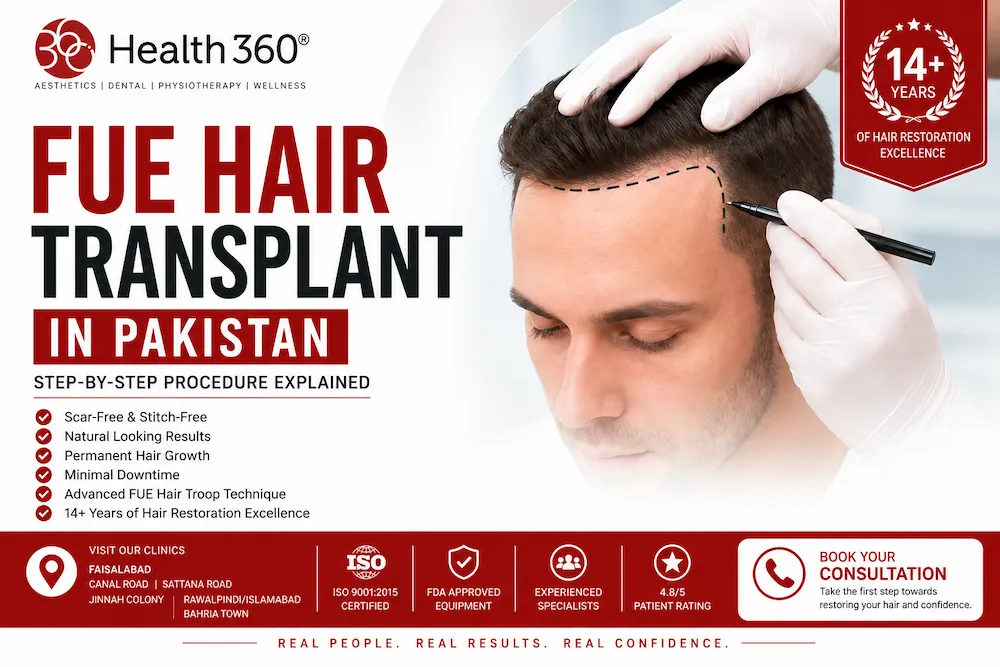
Creating a natural-looking hairline requires both medical expertise and artistic planning. Instead of placing hair in a straight line, specialists design the hairline according to your facial proportions, age, existing hair pattern, and future hair loss risk. A properly designed hairline ensures the transplant continues to look natural for many years.
Step 3: Preparing the Donor Area
The donor region, usually located at the back of the scalp, is trimmed and cleaned under strict sterilization protocols. Local anesthesia is then administered to keep the procedure comfortable. Since only the treatment area becomes numb, patients remain awake throughout the surgery without experiencing significant pain.
Step 4: Follicular Unit Extraction
Once the donor area is completely numb, the surgeon begins extracting healthy hair follicles one by one using specialized micro-punch instruments. This is the defining feature of the FUE technique and one of the reasons it has become the preferred hair transplant method worldwide.
Each follicular unit naturally contains one to four hair strands. These follicular units are carefully removed without damaging the surrounding scalp tissue. Since individual follicles are extracted rather than a strip of skin, there are no stitches and no long linear scar after healing.
The donor area is selected because the hair follicles in this region are genetically resistant to the hormone responsible for male and female pattern baldness. This allows the transplanted hair to continue growing even after it has been moved to the recipient area.
At Health360, the extraction process is performed with precision to protect the integrity of every graft while maintaining the appearance of the donor area. This helps achieve both natural density and excellent long-term results.
Step 5: Graft Preservation
Extracting healthy follicles is only part of the procedure. Keeping them alive before implantation is equally important. Immediately after extraction, every follicular unit is examined under magnification and sorted according to the number of hairs it contains. The grafts are then placed into specially prepared preservation solutions that maintain the ideal temperature and moisture level.
Proper preservation reduces dehydration and protects the follicles until they are implanted into the scalp. Every minute matters because healthy graft handling directly affects the survival rate and overall density of the transplant. At Health360, graft preservation follows strict medical protocols to maximize follicle survival throughout the procedure.
Step 6: Creating Recipient Sites
After sufficient grafts have been harvested, attention shifts to the area experiencing hair loss. Tiny recipient sites are created using extremely fine instruments. This stage requires exceptional skill because every incision determines the final direction, angle, spacing, and density of the transplanted hair.
The surgeon carefully follows the patient’s natural hair growth pattern so the new hair blends seamlessly with existing hair. The placement also considers future hair loss, ensuring the restored hairline continues to look natural as the patient ages. This artistic planning often separates an average transplant from an outstanding one.
Step 7: Implanting the Hair Follicles
The preserved grafts are then implanted individually into the prepared recipient sites. Single-hair grafts are usually placed along the frontal hairline to create a soft and natural appearance. Multiple-hair grafts are positioned behind the hairline and throughout the crown to increase overall density.
Every follicle is implanted at the correct depth to encourage healthy blood supply and long-term growth. Unlike artificial hair systems or wigs, these transplanted follicles become a permanent part of your scalp and typically continue growing for many years. Health360’s FUE Hair Troop technique emphasizes careful implantation that respects the natural hairline and facial proportions for results that are virtually undetectable.
Step 8: Final Inspection and Post-Procedure Care
After all grafts have been implanted, the medical team performs a thorough inspection to ensure proper graft placement and overall symmetry. The scalp is gently cleaned, and patients receive detailed aftercare instructions before leaving the clinic.
Unlike many surgical procedures, patients usually return home the same day. Since FUE is performed under local anesthesia, hospitalization is generally unnecessary. Health360 also provides patients with an aftercare kit and guidance to support proper healing and encourage healthy hair growth during the recovery period.
Who Is a Good Candidate for FUE Hair Transplant in Pakistan?
Although FUE is highly effective, not everyone experiencing hair loss is immediately suitable for surgery. Ideal candidates generally include individuals who have stable hair loss, healthy donor hair at the back or sides of the scalp, realistic expectations, and good overall health. You may be a suitable candidate if you have:
- Male or female pattern baldness
- Receding hairline
- Thinning crown
- Hair loss following injury or burns
- Previous unsuccessful hair transplant
- Beard or eyebrow hair loss
- Adequate donor hair for extraction
Patients with active scalp infections, uncontrolled medical conditions, or extensive donor hair depletion may require additional evaluation before surgery.
At Health360, every patient undergoes a detailed consultation where specialists assess hair loss patterns, donor density, scalp health, and long-term treatment goals before recommending a personalized plan.
Why a Detailed Consultation Is the Most Important Step?
Many people believe the procedure begins on the day of surgery. In reality, the consultation is often the most critical stage because it determines the overall success of the transplant. During your consultation at Health360, our specialists carefully evaluate several important factors, including the cause of your hair loss, donor area quality, scalp condition, facial proportions, future hair loss progression, and the number of grafts required.
Our team also designs a personalized hairline that matches your facial features rather than creating an artificial appearance. Every treatment plan is customized according to your age, expectations, donor capacity, and desired level of coverage.
How Long Does an FUE Hair Transplant Take?
The duration of an FUE hair transplant depends on the number of grafts required, the size of the treatment area, and the complexity of the case. For most patients, the entire procedure is completed in a single session lasting approximately 6 to 8 hours. During this time, patients can take short breaks for meals, stretching, or using the restroom while the medical team continues following the treatment plan.
Smaller procedures involving hairline correction may finish sooner, while extensive restoration for advanced hair loss may require a longer session or, in some cases, a second treatment day. At Health360, standard coverage is typically completed during a single session, allowing patients to return home on the same day.
Does an FUE Hair Transplant Hurt?
One of the biggest concerns among first-time patients is pain. Fortunately, an FUE hair transplant is considered a comfortable procedure because it is performed under local anesthesia. Patients remain awake but do not feel pain during follicle extraction or implantation.
You may notice mild pressure or slight movement while the surgeon works, but these sensations are generally well tolerated. After the anesthesia wears off, some patients experience mild soreness or tightness around the donor area, which usually resolves within a few days and can be managed with prescribed medication.
Because no large incisions or stitches are involved, recovery discomfort is considerably less than with traditional strip surgery.
Recovery Timeline After an FUE Hair Transplant
Recovery is gradual, and understanding what to expect helps patients stay confident throughout the healing process.
- First 24 Hours: The scalp may feel slightly tight or swollen. Tiny scabs begin forming around each transplanted follicle, which is a completely normal part of healing. Patients should avoid touching, scratching, or washing the treated area unless instructed by their surgeon.
- Days 2 to 7: During the first week, redness and swelling gradually improve. Small scabs naturally begin falling away as healing progresses. Most patients can comfortably resume desk-based work within a few days, although strenuous physical activity should still be avoided.
- Weeks 2 to 4: Many patients notice transplanted hairs beginning to shed. This stage often causes concern, but it is completely normal and expected.
- The follicles remain healthy beneath the skin while preparing to produce new permanent hair.
- Months 3 to 4: This is when new hair growth usually begins. Initially, the hairs may appear fine and soft, but they gradually become thicker over time.
- Patients often notice improved hairline definition and early increases in density during this stage.
- Months 6 to 8: Hair continues becoming fuller, stronger, and more evenly distributed. Most patients experience a significant cosmetic improvement by this point.
- Friends and family usually begin noticing the transformation without realizing a transplant has been performed.
- Months 9 to 12: The final results become visible as transplanted follicles mature completely. The hair reaches its natural texture, density, and appearance, allowing patients to wash, style, and cut it exactly like the rest of their hair.
At Health360, patients are advised that visible regrowth generally begins after 3 to 4 months, while full results are typically achieved within 9 to 12 months.
When Will You See Results After Hair Transplantation?
Hair restoration is a gradual biological process rather than an overnight transformation. Most patients experience temporary shedding during the 1st month before new growth begins. This phase, known as “shock loss”, is completely normal and should not be mistaken for treatment failure.
The first signs of new hair usually appear between 3rd and 4th month after surgery. Hair becomes progressively thicker over the following months, with approximately half of the final improvement visible around 6 months.
Complete density and natural appearance generally develop between 9 and 12 months, although some patients continue noticing improvements for up to 18 months depending on individual healing and hair growth patterns.
Benefits of FUE Hair Transplant
Follicular Unit Extraction (FUE) has earned its position as the premier hair restoration choice by offering permanent, natural-looking results paired with quick recovery and minimal discomfort. Unlike temporary concealers, wigs, or hair fibers, FUE restores living hair follicles that continue to grow naturally for a lifetime. Beyond physical appearance, regaining fuller hair significantly improves self-confidence and overall quality of life. The primary benefits that make modern FUE stand out include:
- Natural-Looking Hairline: Every follicle is implanted individually, closely following the natural direction, angle, and density of your existing hair. This precise placement avoids the harsh, pluggy appearance of older hair restoration techniques.
- Minimal Scarring, No Stitches: Micro-punch extraction avoids large scalp incisions, so there is no long linear scar and no surgical stitches. The tiny dot-like extraction marks heal naturally and are usually very difficult to notice once the scalp has recovered, which suits patients who prefer short hairstyles.
- Long-Lasting Hair Growth: Transplanted follicles are harvested from donor regions that are generally resistant to DHT-related hair loss, and they usually keep that resistance after transplantation, continuing to grow naturally for many years. Because your existing non-transplanted hair may keep thinning with age, some patients combine transplantation with PRP or a medically supervised regrowth plan to protect overall density.
- Faster Recovery & Minimal Discomfort: Performed under local anesthesia for a virtually pain-free experience, FUE requires no major incisions. Any post-procedure soreness is mild, allowing most patients to resume office work and routine activities within a few days.
- Enhanced Hair Density: Whether treating a receding hairline or a thinning crown, FUE delivers balanced, natural density across targeted areas.
At Health360, our signature FUE hair technique elevates these advantages by aligning customized hairline design with your facial proportions, maximizing graft survival rates, and producing full, long-lasting density.
Estimated Cost of FUE Hair Transplant in Pakistan
The cost of an FUE hair transplant in Pakistan depends primarily on the number of hair grafts required and the extent of hair loss. The estimated cost of hair transplant treatment in Pakistan is approximately PKR 60 to PKR 120 per graft.
Based on the number of grafts commonly required, the estimated treatment cost is:
| Number of Grafts | Estimated FUE Hair Transplant Cost |
| 1,000 grafts | PKR 50,000 – 80,000 |
| 1,500 grafts | PKR 75,000 – 120,000 |
| 2,000 grafts | PKR 100,000 – 160,000 |
| 2,500 grafts | PKR 125,000 – 200,000 |
| 3,000 grafts | PKR 150,000 – 240,000 |
| 3,500 grafts | PKR 175,000 – 280,000 |
| 4,000 grafts | PKR 200,000 – 320,000 |
| 5,000+ grafts | PKR 250,000 – 400,000+ |
These figures provide a general price estimate based on the published per-graft rate. The exact cost of your FUE hair transplant can only be determined after a consultation, because the required graft count varies from patient to patient.
At Health360, the consultation includes an assessment of your hair-loss pattern, donor-area density, scalp condition, and desired coverage. This allows the medical team to determine the appropriate number of grafts and provide a personalized treatment plan rather than recommending unnecessary grafts.
What Affects the Final FUE Hair Transplant Cost?
While the per-graft rate provides a useful starting point, your final treatment cost may vary depending on several factors:
- Number of grafts required: More extensive hair loss generally requires more grafts and therefore increases the overall cost.
- Treatment area: Restoring only the hairline usually requires fewer grafts than treating the hairline, frontal scalp, and crown together.
- Hair density required: Patients seeking greater density may require additional grafts.
- Surgeon’s expertise: The experience and qualifications of the hair restoration specialist can influence the treatment cost.
- Technique and equipment: Advanced FUE techniques and modern extraction equipment may affect the overall treatment price.
- Additional treatments: Some patients may be advised to combine FUE with treatments such as PRP or medically supervised hair-loss therapy.
The goal should not be to choose the cheapest hair transplant available. Proper graft planning, careful extraction, graft preservation, natural hairline design, and precise implantation all play an important role in achieving a natural-looking result.
For an accurate estimate, Health360 recommends a consultation and scalp assessment before treatment. This allows the required graft count and total treatment cost to be determined according to your individual hair-loss pattern and restoration goals.
FUE vs FUT Hair Transplant in Pakistan
Many patients researching hair restoration compare FUE with FUT (Follicular Unit Transplantation). Although both procedures use your own hair follicles, they differ considerably in technique, healing, and cosmetic outcomes.
| Feature | FUE Hair Transplant | FUT Hair Transplant |
| Hair Removal | Individual follicles | Strip of scalp removed |
| Scar | Tiny dot scars | Long linear scar |
| Stitches | Not required | Required |
| Recovery | Faster | Slightly longer |
| Pain | Mild | Moderate |
| Short Hairstyles | Usually suitable | Scar may remain visible |
| Downtime | Minimal | Longer |
| Cosmetic Outcome | Very natural | Natural but depends on scar healing |
Today, FUE has become the preferred technique for most patients because it offers excellent cosmetic results with less downtime and no visible linear scar.
How Many Hair Grafts Do I Need?
The number of grafts required depends on the extent of hair loss, donor hair availability, and the level of density you wish to achieve. The following estimates provide a general guideline:
| Hair Loss Area | Estimated Grafts |
| Hairline Restoration | 1,000 to 1,500 |
| Frontal Hair Loss | 1,500 to 2,500 |
| Crown Area | 1,500 to 3,000 |
| Moderate Baldness | 2,500 to 3,500 |
| Advanced Baldness | 3,500 to 5,000+ |
These figures vary from person to person. During your consultation, Health360 specialists assess donor density, scalp condition, and hair characteristics before recommending the appropriate number of grafts.
Factors That Affect Hair Transplant Success
An FUE hair transplant is not solely dependent on the surgical procedure itself. Several factors influence the final outcome.
- Quality of Donor Hair: Healthy, dense donor hair provides more follicles for transplantation and usually results in better coverage.
- Surgeon’s Experience: Hair transplantation requires both medical expertise and artistic judgment. Proper extraction, graft handling, hairline design, and implantation techniques all contribute significantly to the final appearance.
- Graft Survival: Hair follicles are living tissue. Proper preservation and careful implantation maximize survival rates and improve long-term density.
- Patient’s Overall Health: Good nutrition, controlled medical conditions, and a healthy lifestyle support healing and hair growth after surgery.
- Following Aftercare Instructions: Patients who carefully follow washing instructions, medication schedules, and activity restrictions generally experience smoother recovery and better long-term results.
Are FUE Hair Transplant Results Permanent?
Yes, in most cases. The transplanted follicles are taken from the permanent donor zone at the back and sides of the scalp, where hair is genetically resistant to pattern baldness. Once these follicles establish themselves in the recipient area, they usually continue growing for many years.
However, it is important to understand that your existing natural hair may continue thinning with age. Some patients benefit from PRP therapy or medically supervised hair regrowth plans to maintain overall hair density and protect non-transplanted hair. Health360 offers these complementary treatments as part of a comprehensive hair restoration approach.
Possible Risks and Side Effects
FUE hair transplantation is considered a safe procedure when performed by qualified professionals in a properly equipped medical facility. Like any medical treatment, however, there are potential side effects. Most are temporary and resolve during the normal healing process. Common temporary effects include:
- Mild swelling
- Redness
- Small scab formation
- Temporary numbness
- Mild discomfort
- Itching during healing
- Temporary shedding of transplanted hairs
Less common complications may include infection, prolonged swelling, or uneven growth if aftercare instructions are not followed or if the procedure is performed by inexperienced providers. Choosing an experienced medical team and following all post-operative guidance significantly reduces these risks.
Essential Aftercare Following an FUE Hair Transplant
The first few weeks after surgery play an important role in protecting newly implanted follicles. Patients should follow every instruction provided by their surgeon to support proper healing and maximize graft survival. Key recommendations include:
- Sleep with your head elevated during the first few nights.
- Take prescribed medications exactly as directed.
- Avoid scratching or rubbing the scalp.
- Wash your hair only according to your surgeon’s instructions.
- Protect the scalp from direct sunlight.
- Wear loose-fitting hats only after medical approval.
- Stay well hydrated.
- Attend all follow-up appointments.
Proper aftercare allows the transplanted follicles to establish a healthy blood supply and begin normal growth.
Foods That Support Hair Growth After a Transplant
While food alone cannot guarantee hair growth, a balanced diet supports healing and healthy follicle function. Patients are encouraged to consume foods rich in lean protein, eggs, fish rich in omega-3 fatty acids, spinach, leafy green vegetables, citrus fruits, nuts and seeds, beans and lentils, dairy products, and Whole grains. Adequate hydration and sufficient intake of vitamins and minerals also contribute to healthy recovery.
What Should You Avoid After an FUE Hair Transplant?
During the recovery period, patients should temporarily avoid activities that may interfere with healing or damage newly transplanted follicles. These include smoking, alcohol consumption during the early recovery period, heavy exercise, swimming, steam rooms and saunas, direct sun exposure, tight caps or helmets, hair styling products unless approved by your surgeon, and scratching the treated area. Following these precautions helps protect the grafts while the scalp heals naturally.
Why Choose Health360 for FUE Hair Transplant in Islamabad and Faisalabad?
Selecting the right hair care clinic is just as important as choosing the right procedure. Hair transplantation requires precision, experience, and a commitment to patient safety. Every stage, from consultation to long-term follow-up, influences the final outcome.
Health360 has established itself as one of the trusted names for FUE Hair Transplant in Faisalabad, Islamabad, and across Pakistan by combining experienced professionals, modern technology, and personalized patient care. Here’s why patients choose Health360:
- ABHRS-certified hair transplant surgeon (Dr. Adnan Bashir) with 15+ years of hair restoration experience and 5000+ procedures performed.
- Advanced FUE hair troop technique designed to deliver natural-looking, permanent results.
- Scar-free and stitch-free procedure with minimal downtime.
- ISO 9001:2015 certified facilities following strict sterilization and clinical protocols.
- Modern precision equipment for follicle extraction and implantation, used under strict sterilization and clinical protocols.
- Experienced hair restoration team focused on natural hairline design and maximum graft survival.
- Personalized treatment plans based on scalp condition, donor density, and long-term hair restoration goals.
- Comprehensive hair restoration services, including FUE hair troop, scalp detox treatments, PRP therapy, exosome, medical hair regrowth plans, beard transplants, and eyebrow restoration.
- Four convenient clinic locations serving patients from Faisalabad, Rawalpindi, Islamabad, and surrounding areas.
- 4.9/5 patient satisfaction rating with hundreds of positive reviews.
- Expert consultation to determine your suitability before starting treatment.
At Health360, the goal is not simply to transplant hair but to restore confidence through safe, medically supervised, and natural-looking results.
Final Thoughts
Hair loss can affect your confidence and quality of life, but it does not have to be permanent. Modern FUE hair restoration offers a safe, minimally invasive, and lasting solution for natural hair growth. Because the final outcome relies on precise hairline design, careful graft handling, and strict clinical protocols, choosing an experienced medical team is your most critical step.
At Health360, we combine over 15 years of expertise, advanced FUE Hair Troop technology, and ISO-certified facilities to deliver results you can trust. Whether you are treating a receding hairline, thinning crown, or seeking beard or eyebrow restoration, our team crafts a tailored treatment plan for your specific goals across our Faisalabad and Islamabad clinics. Book your consultation with Health360 today to take the first step toward restoring your hair and reclaiming your confidence.
FAQs
Is FUE Hair Transplant permanent?
In most cases, yes. The transplanted follicles come from the donor area at the back and sides of the scalp, where hair is generally resistant to pattern baldness. Once established, they usually continue growing for many years. Your existing natural hair may still thin over time, which is why a detailed consultation and a long-term plan matter.
Is the procedure painful?
No. The procedure is performed under local anesthesia, so patients remain comfortable throughout the treatment. Mild soreness after surgery usually resolves within a few days.
Will I have visible scars?
FUE does not leave a long linear scar because follicles are extracted individually. Tiny extraction sites heal naturally and become very difficult to notice once the scalp has recovered.
How long does the procedure take?
Most FUE Hair Troop procedures at Health360 are completed in a single session lasting approximately six to eight hours, depending on the number of grafts required.
When will my new hair start growing?
Most patients begin seeing new hair growth after three to four months. Hair continues becoming thicker over the following months, with full results usually visible between nine and twelve months.
Will the transplanted hair look natural?
Yes. Healthy follicles are implanted according to the natural direction, angle, and density of your existing hair, creating results that blend naturally with surrounding hair.
Can women have an FUE Hair Transplant?
Yes. Women experiencing pattern hair loss, thinning hair, or localized bald patches may also be suitable candidates after a detailed medical assessment.
Can FUE restore my beard or eyebrows?
Yes. Health360 also provides beard and eyebrow restoration using the same advanced FUE technique for patients seeking improved facial hair density.
Can PRP be combined with a hair transplant?
Yes. PRP Therapy is often recommended alongside an FUE Hair Transplant to support healing, improve graft survival, and stimulate healthy hair growth.
How do I know if I am a suitable candidate?
A detailed consultation is the best way to determine suitability. During your visit, specialists evaluate your hair loss pattern, scalp condition, donor hair availability, and overall health before recommending a personalized treatment plan.
Which Health360 clinics offer FUE Hair Transplant?
Health360 provides FUE Hair Troop treatment at its clinics in Canal Road, Satiana Road, and Jinnah Colony in Faisalabad, as well as Bahria Town, Islamabad, while maintaining the same medical standards across all locations.
Sources and further reading
- International Society of Hair Restoration Surgery (ISHRS) – ishrs.org — FUE technique, donor-hair permanence, and patient guidance
- American Academy of Dermatology (AAD) – aad.org — hair loss causes and treatment overviews
- MedlinePlus (U.S. National Library of Medicine) – medlineplus.gov — hair transplant procedure information
Clinical claims on this page (procedure steps, recovery timeline, candidacy, and risks) are consistent with guidance from the sources above.