
A severe toothache can make it difficult to eat, sleep, work, or even concentrate on daily activities. Many people assume that the only solution is tooth extraction, but in most cases, a root canal treatment in Pakistan can save the natural tooth while eliminating pain and infection. Modern root canal therapy is safe, comfortable, and highly successful when performed by experienced dentists using advanced equipment. Instead of removing the tooth, the infected pulp is cleaned, disinfected, and sealed, allowing you to keep your natural smile for years.
If you are looking for expert root canal treatment in Faisalabad or Islamabad, Health360 Dental Clinics provides comprehensive dental care with certified dentists & surgeons, modern diagnostic technology, strict sterilization protocols, and personalized treatment plans. Whether you are experiencing severe tooth pain, sensitivity, or swelling, early treatment can prevent more complex dental problems.
This complete guide explains everything you need to know about root canal treatment, including symptoms, causes, procedure, benefits, recovery, costs in Pakistan, and how to choose the right dental clinic.
Key Takeaways
- Root canal treatment saves your natural tooth. It removes infection from inside the tooth, relieves pain, and helps avoid unnecessary tooth extraction.
- Modern root canal procedures are safe and comfortable. With advanced dental technology and local anesthesia, most patients experience little discomfort and recover within a few days.
- Early treatment prevents serious complications. Addressing an infected tooth promptly reduces the risk of abscesses, bone loss, tooth fracture, and more expensive dental procedures later.
- Choosing an experienced dental clinic improves long-term success. At Health360, certified dentists & surgeons, advanced diagnostic equipment, strict sterilization protocols, and personalized treatment plans help ensure effective, long-lasting results.
What Is Root Canal Treatment?
Root canal treatment, also called endodontic therapy, is a dental procedure that removes infected or damaged tissue from inside a tooth. The inner part of every tooth contains soft tissue called the pulp, which consists of nerves, blood vessels, and connective tissue. When this pulp becomes infected due to deep decay, trauma, repeated dental procedures, or cracks in the tooth, bacteria can spread inside the tooth and into the surrounding bone.
Instead of extracting the tooth, a dentist removes the infected pulp, thoroughly cleans the canals, disinfects them, fills the space with a specialized material, and seals the tooth to prevent future infection. Most treated teeth are then restored with a dental crown for long-term protection and strength.
Understanding the Structure of a Tooth
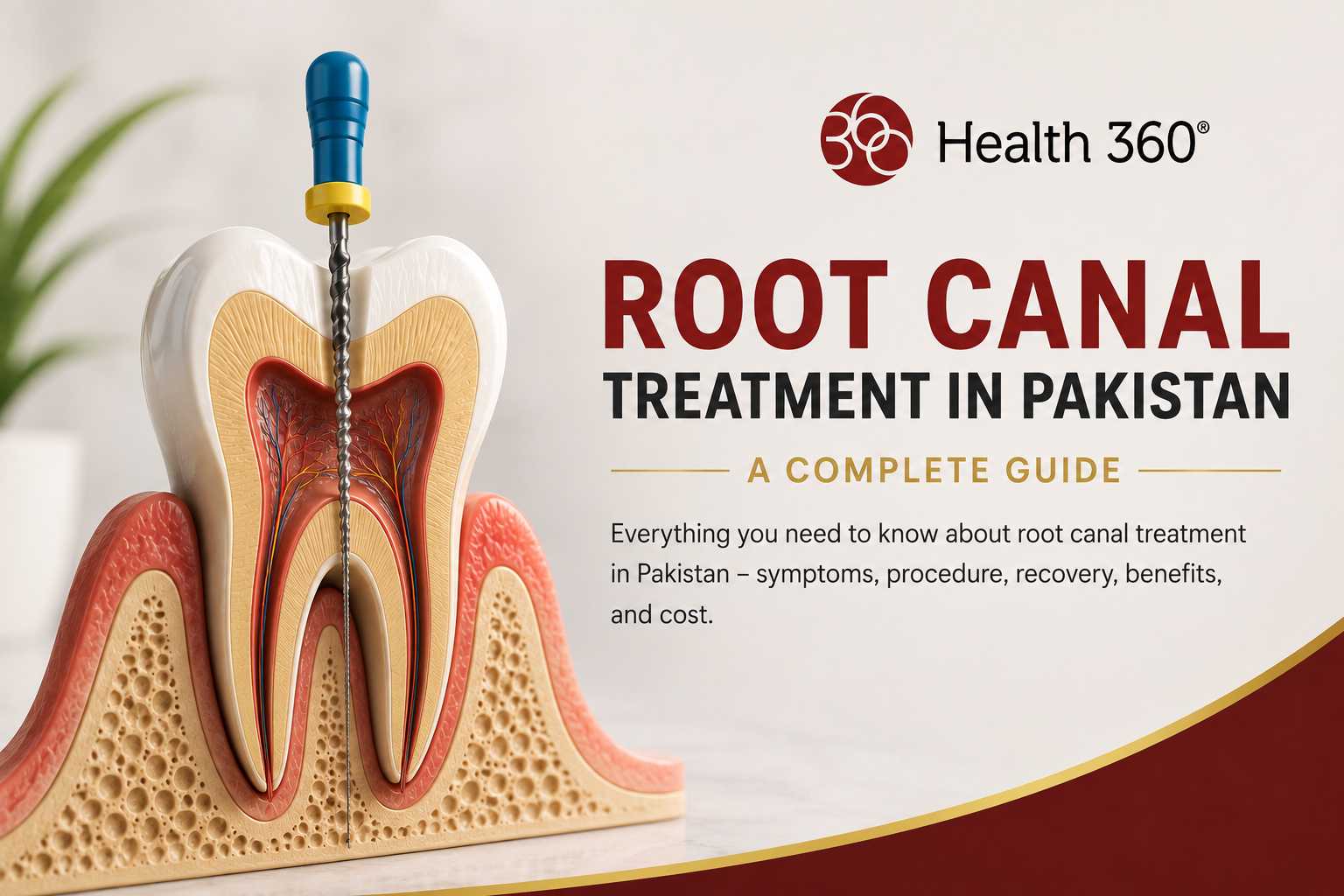
Understanding how a tooth is built helps explain why root canal treatment is necessary. The tooth consists of several layers:
- Enamel, the hard-outer protective layer
- Dentin, the softer layer beneath enamel
- Pulp chamber containing nerves and blood vessels
- Root canals extending into the roots
- Surrounding bone and gums supporting the tooth
When bacteria reach the pulp, the infection cannot heal on its own. Without treatment, the infection usually worsens and may eventually lead to tooth loss.
Why Is Root Canal Treatment Needed?
Root canal therapy becomes necessary when the pulp becomes inflamed or infected. Common causes include deep untreated cavities, large fillings close to the nerve, cracked or fractured teeth, dental trauma, repeated dental work on the same tooth, severe gum disease reaching the roots, and tooth wear exposing deeper layers. Ignoring these problems allows bacteria to multiply inside the tooth, eventually causing severe pain and infection.
Top Warning Signs That You Need a Root Canal
An infected dental pulp rarely goes unnoticed, but the symptoms can vary depending on the severity of the infection. Recognizing these signs early can save you from severe pain and prevent the infection from spreading into the surrounding jawbone and facial tissues.
The most common indicator is a deep, persistent toothache that worsens when you apply pressure or try to chew food. You might also notice lingering sensitivity to hot and cold liquids, which remains painful even after the drink is gone.
In more advanced stages of infection, the gums surrounding the affected tooth may become swollen, tender, or take on a darker hue. Some patients also experience a small, pimple-like bump on their gums, which is a sign of an abscess discharging pus. If you experience any of these warning signs, it is crucial to seek a professional evaluation at a specialized clinic like Health360 to prevent further dental complications.
Step-by-Step Root Canal Procedure
Many people associate root canal treatment with pain simply because they are unfamiliar with the process. In reality, modern dentistry has transformed root canal therapy into a predictable, safe, and comfortable procedure. Using advanced diagnostic imaging, precision instruments, and effective local anesthesia, dentists can remove infection while preserving your natural tooth with minimal discomfort.
Although every case is unique, the treatment generally follows these seven steps.
Step 1: Examination and Diagnosis
Every successful root canal begins with a detailed examination. Your dentist first discusses your symptoms, including tooth pain, sensitivity, swelling, or discomfort while chewing. A thorough clinical examination is then performed to identify the affected tooth and assess the severity of the infection.
To confirm the diagnosis, your dentist may recommend an OPG X-ray or a digital dental X-ray. These images provide a clear view of the internal structure of the tooth and surrounding bone, helping determine the most effective treatment plan. During this stage, the dentist evaluates:
- The extent of the infection
- The shape and number of root canals
- Bone health around the affected tooth
- Presence of an abscess or cyst
- Existing restorations or fractures
At Health360 dental clinics in Faisalabad, advanced diagnostic imaging enables dentists to accurately identify the problem and create a personalized treatment plan before the procedure begins.
Step 2: Local Anesthesia
Before treatment starts, the area surrounding the affected tooth is completely numbed using a local anesthetic. This ensures that you remain comfortable throughout the procedure. Contrary to popular belief, modern root canal treatment is not designed to be painful.
Most patients experience little more than slight pressure or vibration while the dentist works. If you have dental anxiety, inform your dentist beforehand. The dental team will explain each step, answer your questions, and help you feel relaxed during the procedure.
Step 3: Isolating the Tooth
Once the tooth is numb, it is isolated from the rest of the mouth to create a clean and controlled treatment area. This prevents saliva and bacteria from entering the tooth during the procedure and helps maintain a sterile environment.
The dentist then creates a small opening in the crown of the tooth, allowing access to the infected pulp chamber and root canals. Proper isolation is essential for reducing the risk of contamination and improving the long-term success of the treatment.
Step 4: Removing the Infected Pulp
After accessing the inside of the tooth, the dentist carefully removes the infected or damaged pulp tissue using specialized endodontic instruments. These fine instruments are designed to clean even narrow and curved root canals without damaging the surrounding tooth structure.
During this stage, the dentist also removes bacteria, inflamed tissue, and any debris that may be causing pain or infection. The goal is to eliminate the source of the infection while preserving as much of the natural tooth as possible.
Step 5: Cleaning and Disinfection
Once the infected pulp has been removed, the root canals are carefully shaped and thoroughly disinfected. Special antimicrobial solutions are used to flush out bacteria, tissue remnants, and microscopic debris that cannot be removed by instruments alone.
This is one of the most important stages of the procedure because even small amounts of remaining bacteria can increase the risk of future infection. Proper cleaning and disinfection significantly improve the long-term success of the treatment and prepare the canals for sealing.
Step 6: Filling the Root Canals
After confirming that the canals are clean and dry, the dentist fills them with a durable, biocompatible material known as gutta-percha. This material is carefully placed inside each root canal to seal the space completely.
The canals are then sealed with a specialized dental cement to prevent bacteria from re-entering the tooth. A properly sealed root canal protects the tooth from future infection and helps ensure long-lasting treatment success.
Step 7: Tooth Restoration
The final step is restoring the tooth so it can function normally again. Initially, the access opening is sealed with a permanent filling. However, because root canal-treated teeth can become more brittle over time, many patients, particularly those with back teeth, are advised to receive a dental crown.
A crown provides additional protection by restoring the tooth’s strength, appearance, and chewing ability while reducing the risk of fractures. With proper restoration and regular dental care, a root canal-treated tooth can remain healthy and functional for many years.
At Health360 Dental Clinics, dentists carefully evaluate each case to determine whether a filling alone is sufficient or whether a custom crown will provide the best long-term outcome for your oral health.
Can a Tooth Heal Without a Root Canal?
Unfortunately, once the pulp becomes infected, it cannot repair itself. Painkillers and antibiotics may temporarily reduce symptoms, but they do not remove the infected tissue inside the tooth. Delaying treatment increases the risk of:
- Tooth abscess
- Bone infection
- Tooth fracture
- Tooth extraction
- Spread of infection to nearby tissues
Early treatment usually saves both time and money.
Does Root Canal Treatment Hurt?
This is probably the most common question patients ask. The answer is reassuring. Modern root canal treatment is designed to relieve pain, not cause it. With today’s anesthetics, rotary instruments, and advanced techniques, most patients compare the experience to receiving a routine filling. Some mild soreness for a day or two is normal and usually responds well to prescribed medication.
How Long Does Root Canal Treatment Take?
The duration of a root canal depends on the type of tooth, the number of root canals, and the severity of the infection. Front teeth are usually simpler to treat, while molars have multiple canals and require more time.
Typically, a front tooth takes 30 to 60 minutes, a premolar takes 45 to 75 minutes, and a molar may require 60 to 120 minutes. Many root canals can be completed in a single visit, but more complex infections may require two appointments to ensure the tooth is thoroughly cleaned and sealed. At Health360 dental clinics, treatment is tailored to each patient’s needs to achieve the best possible outcome with maximum comfort.
How Long Does a Root Canal Last?
With proper treatment and regular dental care, a root canal-treated tooth can last decades. Its lifespan depends on the quality of treatment, proper crown placement, good oral hygiene, regular dental checkups, and avoiding teeth grinding. Many treated teeth function normally for the rest of a patient’s life.
What Happens If You Delay Treatment?
Ignoring an infected tooth allows bacteria to continue spreading. Possible complications include dental abscess, severe swelling, bone destruction, tooth loss, spread of infection, and higher treatment costs. Early intervention usually prevents these complications.
Root Canal Treatment vs Tooth Extraction
When a tooth is severely infected or damaged, patients often wonder whether they should save the tooth with a root canal or have it extracted. In most cases, dentists recommend preserving the natural tooth whenever possible because it helps maintain your oral health, chewing function, and smile. While tooth extraction may be necessary in certain situations, it often requires additional treatments, such as a dental implant or bridge, to restore function and appearance.
| Root Canal Treatment | Tooth Extraction |
| Preserves your natural tooth | Permanently removes the tooth |
| Eliminates infection while maintaining normal function | May require a dental implant, bridge, or denture to replace the missing tooth |
| Helps preserve the surrounding jawbone | A missing tooth can lead to gradual bone loss over time |
| Maintains proper bite alignment and chewing efficiency | Adjacent teeth may shift into the empty space, affecting your bite |
| Retains your natural smile and appearance | Replacement is often needed to restore aesthetics and function |
| Usually, it is more cost-effective in the long term than extraction followed by tooth replacement | Additional restorative procedures can increase overall treatment costs |
Whenever the tooth can be safely restored, root canal treatment is generally the preferred option. Saving your natural tooth not only maintains normal chewing and speech but also helps prevent future dental problems associated with tooth loss. Your dentist will recommend extraction only when the tooth cannot be restored or preserved successfully.
Benefits of Root Canal Treatment
Saving the natural tooth offers many long-term advantages over extraction. Benefits include:
- Eliminates infection
- Relieves pain
- Preserves natural chewing function
- Maintains jawbone health
- Prevents neighboring teeth from shifting
- Improves appearance
- More cost-effective than replacing a missing tooth
- Long-lasting results with proper care
Learn more:
Dental Treatment Costs in Faisalabad: Prices for Braces, Implants & More
Post-Treatment Recovery and Care Tips
After your root canal procedure is complete, you may experience some mild tenderness or sensitivity for a few days, especially when chewing. This is completely normal and can be managed easily with standard over-the-counter pain relievers.
To ensure your treated tooth heals quickly and lasts a lifetime, keep the following essential tips in mind:
- Avoid chewing or biting down on hard foods with the treated tooth until your permanent dental crown has been fully fitted and cemented in place.
- Maintain an excellent oral hygiene routine by brushing twice a day with fluoride toothpaste and flossing carefully around your teeth.
- Schedule regular bi-annual dental cleanings and examinations at a certified clinic to ensure your teeth and gums remain free of decay and infection.
Root Canal Treatment Cost in Pakistan
The cost of root canal treatment in Pakistan varies widely depending on several factors, including the location of the tooth, the number of root canals involved, the complexity of the case, and the type of restoration needed afterward. Front teeth (incisors and canines) usually have only a single canal, making them easier and cheaper to treat, whereas molars (back teeth) can have three or four canals and require more clinical time.
For an accurate quotation, contact Health360 for a reliable consultation and dental examination.
Common Myths About Root Canal Treatment
Myth 1: Root canals are extremely painful
Modern treatment is comfortable and is performed under local anesthesia.
Myth 2: Tooth extraction is always better
Saving the natural tooth is almost always the preferred option.
Myth 3: Root canals cause illness
Scientific research has found no evidence supporting this myth.
Myth 4: One visit is always enough
Some cases require multiple visits depending on infection severity.
Myth 5: The tooth no longer needs care
A treated tooth still requires brushing, flossing, and regular dental checkups.
How to Prevent Needing a Root Canal
The best way to avoid a root canal is to maintain a healthy oral environment and address dental decay before it reaches the inner pulp of your tooth. By combining consistent daily habits with professional checkups, you can significantly reduce the risk of deep infection and keep your natural smile healthy.
- Brush and Floss Daily: Brush twice a day with fluoride toothpaste and floss daily to remove plaque and decay-causing bacteria.
- Limit Sugar and Hard Objects: Reduce sugary foods that feed bacteria, and avoid using your teeth to open packages or bite hard objects.
- Wear Protective Gear: If you play contact sports, wear a custom mouth guard to protect your teeth from structural trauma.
- Visit Health360 Clinic Regularly: Schedule professional dental checkups and cleanings every six months to detect and treat cavities early.
Why Choose Health360 for Root Canal Treatment in Pakistan?
Choosing the right dental clinic is just as important as the treatment itself. At Health360 Dental Clinics, experienced dentists, modern technology, and a patient-first approach ensure every root canal procedure is performed safely, comfortably, and with long-term success in mind.
Here’s why patients trust Health360:
- Experienced and certified male and female dentists providing expert endodontic and restorative care.
- Advanced diagnostic technology, including OPG and digital X-rays, for accurate diagnosis and treatment planning.
- Modern root canal techniques with high-quality materials, including Zirconia and PFM crowns for durable restorations.
- Strict sterilization and infection control protocols to ensure patient safety.
- Comfort-focused, pain-minimized procedures with personalized treatment plans.
- Comprehensive dental services including fillings, crowns, scaling, teeth whitening, braces, aligners, wisdom tooth removal, and cosmetic dentistry.
- Transparent pricing with clear treatment plans and no hidden charges.
- Trusted by patients, with over 1,000 successful dental treatments and a 9/5 rating from more than 600 patient reviews.
- Multiple convenient locations in Faisalabad (Canal Road and Satiana Road) and Islamabad (Bahria Town).
Whether you need a routine root canal or a more complex restoration, Health360 provides comprehensive dental care from diagnosis to recovery, helping you preserve your natural tooth and smile with confidence.
Complete Dental Services Available at Health360
Beyond root canal treatment, Health360 offers comprehensive dental care for individuals and families. Services include:
- Routine dental examinations
- Scaling and polishing
- Tooth-colored fillings
- Teeth whitening
- Dental crowns and bridges
- Zirconia crowns
- Tooth extractions
- Surgical wisdom tooth removal
- Braces and orthodontics
- Invisible aligners
- Dentures
- Cosmetic dentistry
- OPG X-rays
- Preventive dental care
Having all these services available in one clinic allows patients to receive coordinated treatment without visiting multiple providers.
Root Canal Treatment in Faisalabad
If you are searching for root canal treatment in Faisalabad, choosing a clinic with experienced dentists and modern diagnostic facilities can make a significant difference in your treatment experience and long-term results.
Health360 serves patients across Faisalabad through its locations on Canal Road, Saeed Colony and Satiana Road, People’s Colony No 1. These clinics provide comprehensive dental services in a clean, comfortable environment, with both male and female dentists available. From emergency tooth pain to complex restorative procedures, patients receive personalized care designed to preserve natural teeth and restore oral health.
Root Canal Treatment in Islamabad
Health360 also provides professional dental care for patients in Islamabad through its Bahria Town clinic. Equipped with advanced technology and supported by experienced dental professionals, the clinic offers root canal therapy alongside preventive, restorative, and cosmetic dental treatments.
Patients can benefit from convenient appointment scheduling, transparent treatment planning, and a focus on comfortable, patient-centered care.
Conclusion: Book Your Consultation at Health360 Today
Ignoring a toothache will not make it go away; instead, it can lead to more severe infections, bone loss, and the eventual need for a painful tooth extraction. Root canal treatment is a highly safe, routine, and virtually painless procedure designed to save your natural tooth and instantly relieve your oral pain.
At Health360, we believe in providing honest, transparent, and top-tier dental care that puts your comfort first. Our team of professional male and female dental surgeons is ready to help you restore your smile with confidence. Contact us today on WhatsApp or visit one of our branches in Faisalabad or Islamabad to book your comprehensive dental consultation.
FAQs
How successful is root canal treatment?
Root canal treatment has a success rate of over 90% when performed correctly and followed by proper restoration and oral hygiene.
Can I drive home or continue work after the procedure?
Yes. Most patients can safely drive home or continue work unless they have received sedation.
Will I need a crown afterwards?
Many molars and heavily damaged teeth require crowns to restore strength and reduce the risk of fractures.
Is root canal treatment safe during pregnancy?
Many dental procedures, including root canals, can be safely performed during pregnancy when necessary. Your dentist will coordinate treatment based on your stage of pregnancy.
Can children need root canal treatment?
Yes. Children with deep decay or dental trauma may require specialized root canal procedures to preserve their teeth.
What if the infection returns?
In some cases, retreatment or endodontic surgery may be required. Regular follow-up appointments help detect any issues early.
Can I brush my teeth after a root canal?
Yes. Continue brushing and flossing carefully while avoiding excessive pressure on the treated tooth until it is fully restored.
When should I contact my dentist after treatment?
Contact your dentist if you experience severe pain lasting more than a few days, increasing swelling, fever, or if the temporary filling falls out.